How To Get Some R & R On A Red Eye Flight
Some people find it easy to sleep on planes, others don’t. But getting some good quality kip on a long haul flight can make the world of difference, ensuring you start and finish your holiday feeling relaxed and raring to go. These tips from 101 Holidays from will send you off into the land of nod.
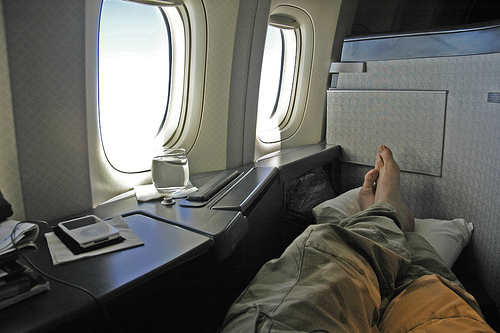
Get A Good Seat
Assuming you don’t have the funds for a flat bed, try to grab the best possible seat in economy. That means checking in online as soon as you can, usually 24 hours before take-off. On short-haul flights most regular flyers opt for an aisle seat, but if you want some serious long-haul shut-eye, a window is best. This gives you something to lean your head against, and control of the window blind.
Avoid seats in the back row or immediately in front of an emergency exit, which often don’t recline. Emergency exit seats offer additional legroom, but bear in mind that passengers may congregate near the doors and trip over your outstretched feet.
Get Kitted Out
Don’t dress to impress check-in staff – contrary to popular belief, upgrades are not handed out to passengers who wear their Sunday best. Instead, opt for loose clothing and lots of layers, ready to adjust to fluctuations in cabin temperature.
Take a large soft-sided carry-on bag – if you have short legs you can use it as a footrest. Try to be self-sufficient: take a bottle of water and pack your own toiletries bag so you are not reliant on the goodwill of cabin crew.
Arguably, the two most important pieces of kit for a good night’s sleep are ear plugs and eye shades. These are not always provided by the airline, so take your own. Wear loose-fitting shoes or thick slipper socks and pack an inflatable neck pillow.
Stay Healthy
Eat a light meal before you plan to sleep. If it’s a short overnight flight (such as New York to London) try to eat before you board then hit the sack immediately after take-off. Avoid caffeine, alcohol, chocolate and carbonated drinks (the bubbles can expand to leave you feeling bloated).
A more important consideration is deep vein thrombosis. According to Government advice, the risk of thrombosis is greatest on flights of 8-10 hours or more. It recommends you stay hydrated, walk around the cabin periodically and regularly flex and extend your ankles.
Jet Lag
If you are skipping across time zones, tiredness is likely to be compounded by jet lag. Dr Chris Idzikowski, director of the Edinburgh Sleep Centre, recommends setting your watch to the time at your destination and only eating and sleeping at “local” times. The idea is to fool yourself into thinking you’ve already arrived, thus starting the adjustment process early.
Looking for ideas of where to travel? Find this year’s Top 10 holiday destinations
