Recently, Ryanair announced a huge slump in share prices (11%) after the travel company suggested that over the coming year, profits are very likely to fall.
Ryanair have stated that they expect to make a profit less than previously thought. Profit figures were expected to have been 570 million Euros, whereas now forecasters are expecting of profits to be in the region of between 500m Euros (£423m) and 520m Euros. This is for the financial year, which ends in March.
Due to the fall in projected profits, Ryanair said they expect airline fares to fall around 10% over the winter months and as a result, aircrafts are being grounded at airports across Europe.
This is the first time in five years that Ryanair’s annual profit margin will have fallen, which has come shortly after they made the announcement; the first one in 10 years.
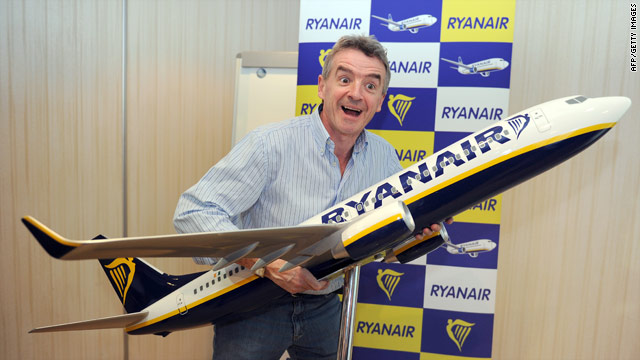
Ryainair Introduces Reserved Seating
Ryanair have recently announced that they are to introduce allocated/reserved seating, starting February next year. Passengers who wish to reserve and pick their seats will be charged £5 for the luxury. This could see profit margins fall even further due to consumers flying with another airline, as extra charges start to stack up. On the other hand, this policy it could help boost margins for Ryanair and its share holders due to consumers preferring a choice, in which case remains to be seen.
Softer conditions
Michael O’Leary, chief executive of Ryanair, Europe’s biggest discount airline stated that fares were falling as a result of “increased price competition, softer economic conditions in Europe and the weaker euro-sterling exchange rate”.
“The continuing fare and yield softness means that full-year profits will be lower than previously guided”.
The warning made by Ryanair came after the airline recently reported a net profit of 602 million Euros over a six month period (up until the end of September), which suggested a small increase of 1% in comparison with the previous year.
Ryanair’s passenger figures indicated that they carried a whopping 49 million passengers to several European destinations during the period and in turn generated turnover revenue of 3.26 billion Euros, which incredibly was up 5% compared with the same period the previous year.
‘Listen to customers’
As with any airline, they must listen to customers and what their needs are in terms of what they expect as part of the service in which they are paying for. Many companies can easily forget the principles of ‘the customers always right’ and with that can result in customers finding alternatives, a huge fall in profit margins and being behind the competition. This can take years to repair; once a reputation has been damaged or customers start to go elsewhere, it’s then extremely difficult to get them back again.
Ryanair has perhaps ‘forgotten’ about their customers in some ways, as it’s thought that consumers are finding cheaper alternatives as opposed to flying with the company. Ryanair responded by stating that over “the next 12 months will see a brief pause in traffic growth”. But, they must put measures in place in order to make sure they do so, or they could find themselves struggling and like many airlines before them, have gone bust.
Ryanair are looking to adapt to the changing market demands and travel trends etc. and are now making the effort of focusing on improving its service for customers, which is more than likely an attempt to keep hold of customers and attract new ones. Easier said than done though and over the next year or so, there will be evidence of whether or not these measures have worked.
The airline has also announced the introduction of a further measure to make it possible for any passenger to carry a small second bag onto the plane and a 24 hour “grace period”, which enables passengers to correct any minor booking errors that they could have made when booking.
Joanne, the author of this article has worked in the travel industry for many years and by doing so, has vast experience in the industry. Joanne also keeps an eye on the ever changing travel trends that occur throughout Europe.
